SEO Site Scan
Free SEO site scan with fix-first actions
Run a quick scan for technical SEO, indexing signals, metadata quality, broken links, and speed risks. The report is built for smaller teams that need practical next steps, not a giant export.
SEO Site Scan
Run a quick scan for technical SEO, indexing signals, metadata quality, broken links, and speed risks. The report is built for smaller teams that need practical next steps, not a giant export.
Real report preview
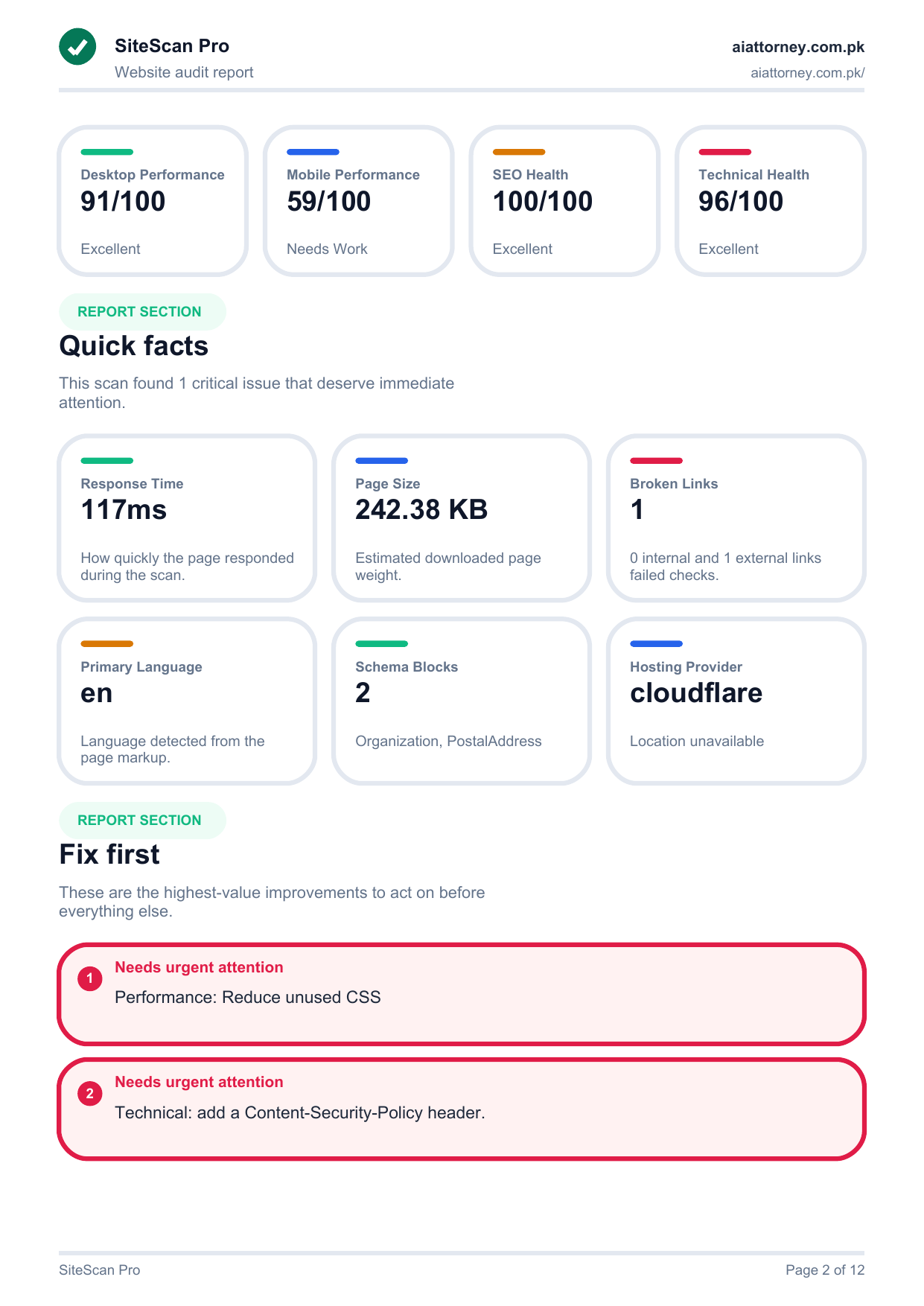
This page from a SiteScan Pro PDF for aiattorney.com.pk shows performance, SEO, and technical scores alongside quick facts and the first fixes to review. It is a dated example, so your own scan will show different results.
Spot noindex, canonical, robots, and sitemap issues that stop pages from being discovered properly.
Review title, meta description, heading clarity, and social tags so your result looks more clickable.
Check HTTPS setup, redirect alignment, link health, and caching basics that affect quality signals.
Benchmark snapshot
Execution data
Ranking playbook
Read next
FAQ